
In the Shadow of the Ceasefire: Revolutionary Rhetoric and the Collapse of Iranian Livelihoods
Koo Gi Yeon (SNUAC)
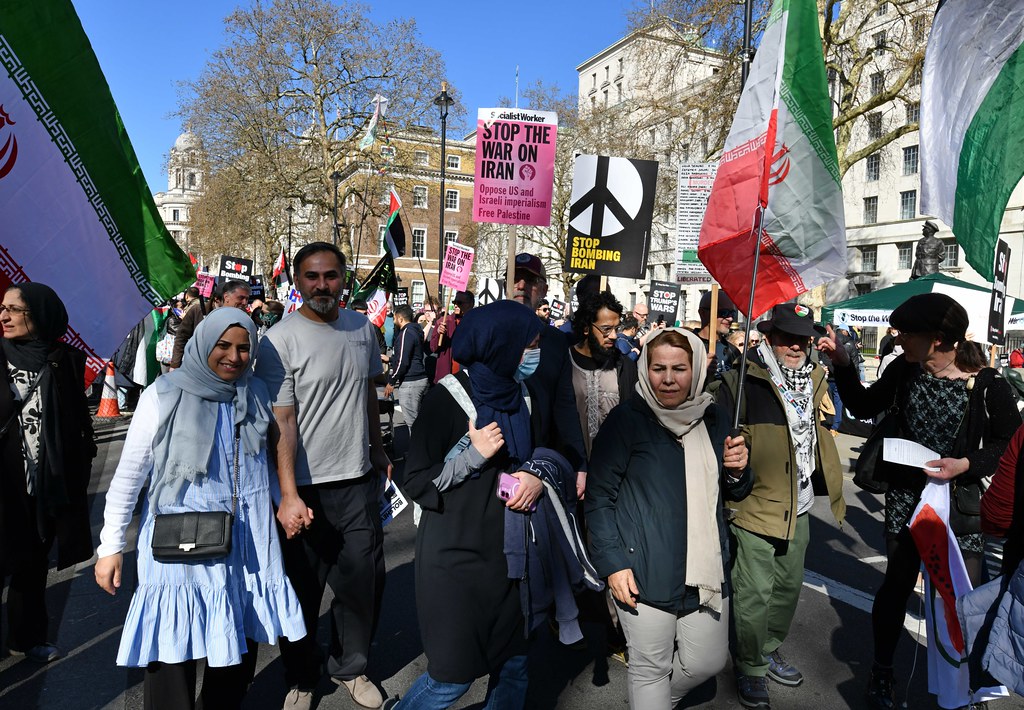
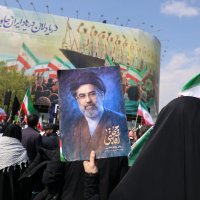
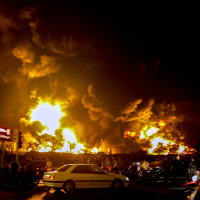
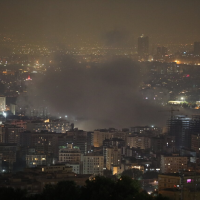
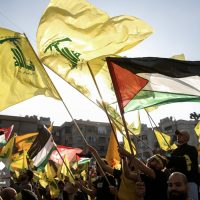
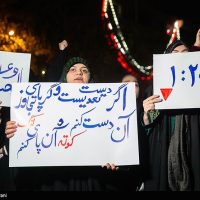
On April 8, 2026, the moment a two-week ceasefire between the United States and Iran was announced, a paradoxical cry erupted in the streets of Tehran. Pro-government demonstrators screamed “Death to America, Death to Israel, Death to the compromisers!” while burning American and Israeli flags. Organizers tried to calm the crowd, but the chants would not stop. This scene encapsulates the dual predicament Iran faces in the wake of the ceasefire. The fighting may have paused, but the political and economic crisis of the Islamic Republic of Iran is only now entering its most serious phase.
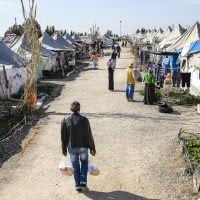
The Iranian acquaintances with whom this author stays in contact all lead their messages with exhaustion these days, before anything else. They describe daily blackouts lasting several hours that paralyze everyday life, and frequent water cutoffs that make it difficult to shower at a normal time. Schools have long since ceased to function normally, and the population as a whole is gripped by acute anxiety and depression. At the market, the prices of basic staples — eggs, milk, fruit — have soared, and every trip to the grocery store means deciding what to go without. Their accounts lay bare the reality of ordinary Iranians in ways that statistics simply cannot capture.
The numbers, too, tell a grim story. Inflation is approaching 60 percent, and job losses attributable to the war are estimated to exceed one million. Internet shutdowns lasted as many as 22 days in March alone, and business associations warn that the resulting daily economic losses run into the tens of millions of dollars. This devastation did not arrive overnight. Even before the war, Iran was already under severe strain from decades of sanctions, structural dysfunction, and chronic water scarcity.
This raises a central question. With ordinary life in such a desperate state, why are the streets filled with chants of “Death to the compromisers”? For the Islamic Revolutionary Guard Corps (IRGC) and the hardline faction, this war must be narratively reconstructed as “resistance against aggression.” The suffering of the people becomes the result of an “economic war” imposed by imperialist enemies — and on that logic, compromise is tantamount to defeat and betrayal. Even after the ceasefire, Iran has continued to demand firm international guarantees against future aggression as a condition for any lasting settlement.
Within Iran today, multiple voices coexist, each dreaming of a different future. The hardline faction, for whom regime preservation comes first, finds its political lifeline in intensifying internal cohesion the greater the external pressure becomes. The moderate reformists, pursuing pragmatic survival, judge that the regime itself cannot endure without economic reconstruction, and seek to widen, however cautiously, the space for dialogue. Yet the war has, if anything, succeeded in silencing the very calls for reform in Iranian society that had persisted right up until its outbreak.
Reports are now emerging that negotiations for a 60-day ceasefire extension — encompassing the reopening of the Strait of Hormuz, permission for Iranian oil sales, and discussions on the nuclear program — are entering their final stages. But a negotiated agreement does not mean Iran’s stabilization. Even if sanctions are partially eased, the structural economic distortions accumulated over decades, the collapse of basic infrastructure, and the deep erosion of public trust in the government cannot be undone in the short term. Until the day children return to school, households receive reliable electricity and water, and the weight of the shopping basket grows lighter, the Islamic Republic of Iran stands on a brutal testing ground — caught between the language of revolution and the logic of survival. Which direction that exit opens will determine not only the geopolitical order of the Middle East, but also the energy security and diplomatic space of South Korea in fundamental ways.
휴전의 그늘: 이슬람 혁명의 언어와 무너지는 이란 민생
구기연 (서울대학교 아시아연구소)
2026년 4월 8일, 미국·이란 간 2주 휴전이 선언되는 순간, 테헤란 거리에서는 역설적인 함성이 터져 나왔다. 친정부 시위대가 “미국에게 죽음을, 이스라엘에게 죽음을, 타협자에게 죽음을!”을 외치며 미국과 이스라엘 국기를 불태운 것이다. 주최 측이 시위대를 진정시키려 했지만 구호는 멈추지 않았다. 이 장면은 휴전 이후 이란이 처한 이중적 곤경을 압축적으로 보여준다. 전쟁은 멈추었지만, 이란 이슬람 공화국의 정치적·경제적 위기는 이제 막 본격화되고 있다. 이란의 지인들은 요즘 안부를 묻는 메시지에 한결같이 고단함을 먼저 전한다. 하루에도 몇 시간씩 이어지는 정전으로 일상이 마비되고, 단수가 잦아 제때 샤워조차 하기 어렵다고 토로한다. 학교는 정상적인 수업이 멈춘 지 오래이며, 국민들은 모두들 극심한 불안과 우울 상태에 놓여 있다. 시장에서는 달걀, 우유, 과일 같은 기초 식품 가격이 치솟아, 장을 볼 때마다 무엇을 포기해야 할지 선택해야 하는 처지가 되었다고 한다.
수치로 보아도 상황은 심각하다. 인플레이션은 60%에 육박하고, 전쟁으로 인한 일자리 손실은 100만 명을 넘어선 것으로 추산된다. 인터넷 차단은 3월 한 달에만 22일에 달했고, 이로 인한 하루 경제 손실은 수천만 달러에 이른다고 재계는 호소한다. 이 같은 경제적 참상은 어느 날 갑자기 찾아온 것이 아니다. 전쟁 이전부터 이란은 수십 년간의 제재와 구조적 부실, 물 부족으로 이미 심각한 압박을 받고 있었다.
여기서 핵심적인 질문이 제기된다. 민생이 이토록 참담한데, 왜 거리에서는 오히려 “타협자에게 죽음을”이라는 구호가 나오는가? 이슬람혁명수비대(IRGC)와 강경파에게 이번 전쟁은 ‘침략에 맞선 저항’의 서사로 재구성되어야 한다. 민생의 고통은 제국주의 적들이 강요한 ‘경제 전쟁’의 결과이며, 그렇기에 타협은 곧 패배이자 배신이 된다. 이란은 휴전 이후에도 미래의 침략에 대한 확고한 국제적 보장을 종전의 조건으로 내걸고 있다. 현재 이란 내부에는 서로 다른 미래를 꿈꾸는 복수의 목소리가 공존한다. 체제 수호를 최우선으로 삼는 강경파는 외부의 압력이 거셀수록 내부 결집을 강화하는 데서 정치적 활로를 찾는다. 실용적 생존을 모색하는 온건 개혁파들은 경제 재건 없이는 체제 자체가 지속 불가능하다고 판단하며, 제한적이나마 대화의 공간을 넓히려 한다. 하지만 오히려 이번 전쟁으로 직전까지 지속되었던 이란 사회에 대한 개혁의 목소리를 막아 버렸다.
현재 호르무즈 해협 재개방과 이란 석유 판매 허용, 핵 프로그램 논의를 포함한 60일 휴전 연장 협상이 마무리 단계에 접어들었다는 보도가 나오고 있다. 그러나 협상 타결이 곧 이란의 안정을 의미하지는 않는다. 설령 제재가 일부 완화되더라도, 수십 년간 누적된 구조적 경제 왜곡과 인프라 붕괴, 그리고 정권 불신은 단기간에 해소될 수 없다. 아이들이 학교로 돌아가고, 가정에 안정적으로 전기와 물이 공급되고, 장바구니의 무게가 줄어드는 날이 오기까지, 이란 이슬람 공화국은 혁명의 언어와 생존의 논리 사이에서 출구를 찾아야 하는 가혹한 시험대 위에 서 있다. 그 출구가 어느 방향으로 열리느냐에 따라, 중동의 지정학적 질서는 물론 한국의 에너지 안보와 외교적 공간 역시 근본적으로 달라질 것이다.
- All
- 2023 10월호
- 2023 3월호
- 2023 4월호
- 2023 5월호
- 2023 6월호
- 2023 9월호
- 2023년 11월호
- 2023년 12월호
- 2024년 10월호
- 2024년 11월호
- 2024년 11월호
- 2024년 12월호
- 2024년 12월호
- 2024년 3월호
- 2024년 4월호
- 2024년 5월호
- 2024년 6월호
- 2024년 9월호
- 2025년 10월호
- 2025년 11월호
- 2025년 12월호
- 2025년 3월호
- 2025년 4월호
- 2025년 5월호
- 2025년 6월호
- 2025년 9월호
- 2026년 3월호
- 2026년 5월호
- 2026년 5월호
- 2026년 6월호
- MENA Focus
- 기고문
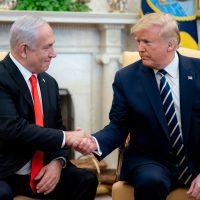
![Israeli Prime Minister Netanyahu Delivers Joint Remarks with Secretary Pompeo and Bahraini Foreign Minister Al-Zayani
More:
Secretary of State Michael R. Pompeo delivers remarks with Israeli Prime Minister Benjamin Netanyahu and Bahraini Foreign Minister Abdullatif bin Rashid Al-Zayani, in Jerusalem, Israel, on November 18, 2020. [State Department Photo by Ron Przysucha/ Public Domain]. Original public domain image from Flickr](http://wac.snuac.ac.kr/wp-content/uploads/2026/04/image-from-rawpixel-id-4045986-original-2400x1601-1-200x200.jpg "image-from-rawpixel-id-4045986-original-2400x1601")
![President Trump makes remarks at the U.S. Embassy Buenos Aires meet and greet
More:
President Donald Trump conducts a meet and greet with the staff and families of US Embassy Buenos Aires along with Secretary Michael R. Pompeo in Argentina, 30 November 2018. [State Department photo/ Public Domain]. Original public domain image from Flickr](http://wac.snuac.ac.kr/wp-content/uploads/2025/10/Trump--200x200.jpeg "President Trump makes remarks at the U.S. Embassy Buenos Aires meet and greetMore: President Donald Trump conducts a meet and greet with the staff and families of US Embassy Buenos Aires along with Secretary Michael R. Pompeo in Argentina, 30 November 2018. [State Department photo/ Public Domain]. Original public domain image from Flickr")



- All
- 2023 10월호
- 2023 3월호
- 2023 4월호
- 2023 5월호
- 2023 6월호
- 2023 9월호
- 2023년 11월호
- 2023년 12월호
- 2024년 10월호
- 2024년 11월호
- 2024년 11월호
- 2024년 12월호
- 2024년 12월호
- 2024년 3월호
- 2024년 4월호
- 2024년 5월호
- 2024년 6월호
- 2024년 9월호
- 2025년 10월호
- 2025년 11월호
- 2025년 12월호
- 2025년 3월호
- 2025년 4월호
- 2025년 5월호
- 2025년 6월호
- 2025년 9월호
- 2026년 3월호
- 2026년 5월호
- 2026년 5월호
- 2026년 6월호
- MENA Focus
- 기고문