
Retrospect and Outlook on the Gulf Regional Situation amid the Prolonged Aftermath of the 2023 Gaza War
So Yeon Ahn (SNUAC)
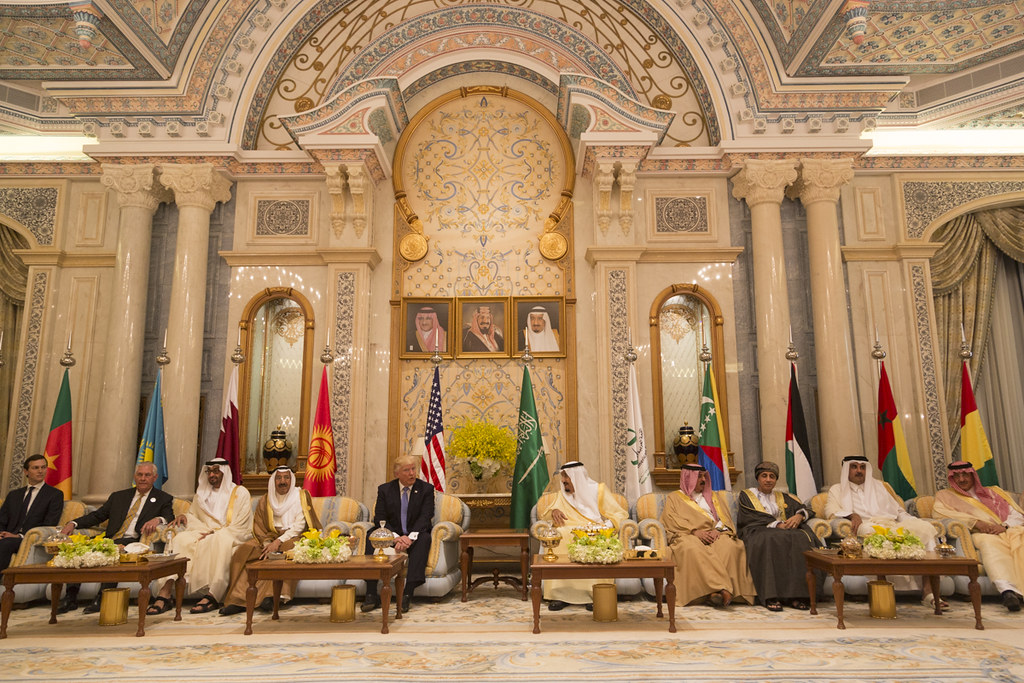
In 2025, the Gulf region experienced an exceptionally busy year as political uncertainty intensified amid the lingering repercussions of the 2023 Gaza war, prompting Gulf states to explore a wide range of response strategies. In particular, following President Donald Trump’s return to office, Gulf countries sought to strengthen relations with the new U.S. administration while positioning themselves as mediators in an effort to overcome political instability across the Middle East. In May 2025, President Trump selected Saudi Arabia, Qatar, and the United Arab Emirates as the destinations of his first overseas trip since returning to power. In his Riyadh speech, he praised the Gulf states’ autonomous reform initiatives and emphasized that the door to negotiations with Iran remained open, signaling a preference for regional stability over direct involvement in a full-scale Middle Eastern war. Notably, Saudi Arabia demonstrated its role as a mediator by hosting a meeting between President Trump and Syrian transitional government President Ahmed al-Sharaa. During the same trip, President Trump concluded large-scale agreements with Gulf countries in areas such as artificial intelligence and defense, underscoring the Gulf states’ suitability as partners in his transaction-oriented approach to diplomacy.
Meanwhile, the so-called “12-day war” that broke out in June 2025—marked by Israeli strikes on Iran’s nuclear facilities and subsequent U.S. military involvement—once again heightened political instability in the Gulf region. Gulf states voiced solidarity with Iran and criticized Israel. This sense of insecurity was further exacerbated by Israel’s September 2025 airstrike targeting Hamas leadership in Qatar, which came as a profound shock to Gulf countries. As a result, Gulf states have once again been reminded of their security vulnerabilities and are expected to place greater emphasis on strengthening their security posture.
Amid rising political instability, signs of renewed diplomatic thaw have also emerged. Recently, Iran and Saudi Arabia reportedly held a trilateral meeting with China in Tehran, where discussions focused on the implementation of agreements aimed at restoring bilateral relations.
Although a ceasefire agreement in the Gaza war was reached in October 2025, doubts remain regarding its sustainability. Should the ceasefire collapse, Iran and the so-called Axis of Resistance are likely to expand the front of resistance against Israel, further heightening political instability within the Gulf region. Conversely, if the Gaza war stabilizes to some extent, Gulf states are expected to accelerate the implementation of their economic visions while simultaneously seeking new approaches to enhance security. Under such conditions, efforts strongly promoted by President Trump to normalize relations between Saudi Arabia and Israel could also gain renewed momentum. In 2026, the geopolitical landscape surrounding the Gulf region is expected to increasingly reflect efforts to seek a new form of stability amid persistent uncertainty.
2023년 가자 전쟁 여파 속 걸프 지역 정세 회고 및 전망
안소연 (아시아연구소)
2025년 걸프 지역은 2023년 가자 전쟁의 여파 속 정치적 불확실성이 고조되면서 대응 방안을 다각도로 모색하느라 매우 분주히 움직였던 한해였다. 특히 미국 트럼프 대통령의 재집권과 함께 걸프 지역은 미국 신정부와 관계 강화를 꾀하는 동시에 중재 역할을 주도하며 중동 지역의 정치적 불안을 극복하고자 하였다. 2025년 5월 트럼프 대통령은 집권 이후 최초의 해외 순방지로 사우디아라비아, 카타르, 아랍에미리트를 선택하였다. 트럼프 대통령은 사우디 리야드 연설을 통해 걸프 국가들의 주체적인 개혁 정책을 높이 평가하였다. 더불어 이란과 협상의 문을 열어두었다고 강조하면서 중동 전면전에 개입하기보다 안정을 꾀하고자 함을 드러냈다. 특히 사우디아라비아는 시리아 과도 정부 아흐마드 알샤라 대통령과 트럼프 대통령 간 회담을 주재하면서 중재자로서 면모를 드러내기도 하였다. 이와 함께 트럼프 대통령 순방 기간 동안 AI, 방산 등 대규모 계약을 걸프 국가들과 체결하면서 걸프 국가들이 트럼프 대통령이 추구하는 거래주의 외교의 적임자임을 확인하였다.
그러나 2025년 6월 발발한 이른바 12일 전쟁에 따른 이스라엘의 이란 핵시설 공격과 이에 대응한 미국의 군사 개입은 걸프 지역의 정치적 불안정을 다시 한번 고조시켰다. 걸프 국가들은 이란과 연대를 표하며 이스라엘을 비난하고 나섰다. 이어 2025년 9월에 있었던 이스라엘의 카타르 하마스 지도부 공습은 걸프 국가들에게 매우 큰 충격일 수밖에 없었다. 이에 따라 걸프 국가들은 안보 취약성을 재실감하고 안보 강화에 더욱 주력할 것으로 보인다.
한편 정치적 불안정이 고조되는 가운데 새로운 해빙 분위기도 감지되었다. 최근 이란과 사우디아라비아는 중국 중재로 이란 테헤란에서 3자 회담을 가진 것으로 알려졌다. 양측 간 관계 회복을 위한 협정 이행 사항에 대한 논의가 이루어진 것으로 알려졌다.
비록 2025년 10월 가자 전쟁 휴전 협정이 이루어졌지만 휴전 지속 가능성에 대해서는 의구심이 존재한다. 휴전이 불발되면 이란과 저항의 축 세력이 다시 이스라엘에 대한 저항 전선을 확대하고 걸프 지역 내 정치적 불안이 고조될 가능성이 높다. 반대로 가자 전쟁이 어느 정도 안정화되면 걸프 국가들은 경제 비전 실현에 더욱 박차를 가하는 동시에 안보 강화의 새로운 방안을 모색할 것으로 전망된다. 또한 트럼프 대통령이 강력하게 추진 중인 사우디와 이스라엘 관계 정상화 노력이 진전을 보일 수 있다. 2026년 걸프 지역을 둘러싼 정세는 불확실성 속 새로운 안정을 찾으려는 노력이 더욱 가시화될 것으로 보인다.