
Turkey’s Calculations amid the U.S.-Israel–Iran War
Han, Ha-eun(SNUAC)
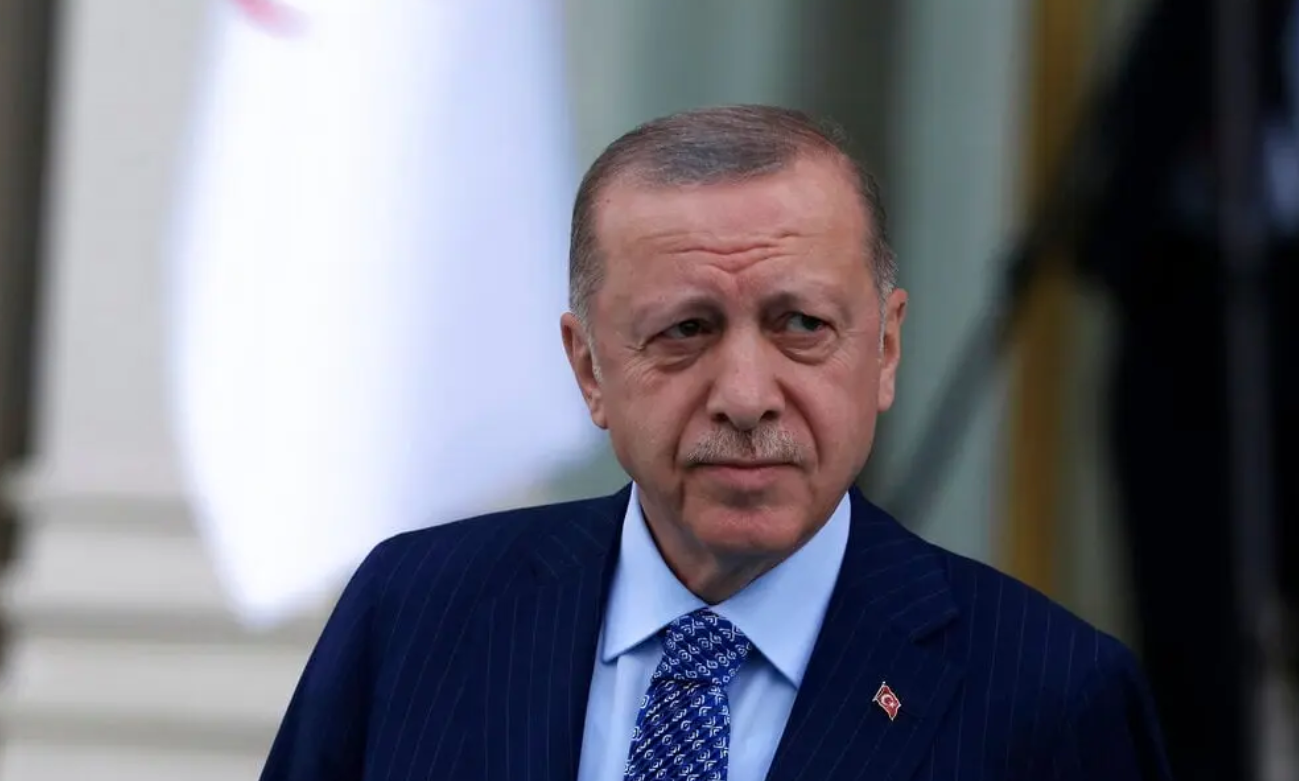
As the U.S.-Israel–Iran war has become prolonged, Turkey’s diplomatic position has moved beyond a simple ‘anti-Israel’ discourse and toward a more complex crisis-management strategy. In the early stage of the war, the Turkish government strongly criticized Israel’s and the United States’ attacks on Iran, defining them as the starting point of a ‘geopolitical deadlock’ that could spread across the Middle East. This position also overlapped with the anti-Israel sentiment that had intensified after the Gaza war, helping the Erdoğan government consolidate support among conservative and Islamist constituencies at home. However, as the war dragged on and the possibility grew that Iran’s missile and drone attacks could expand into the Gulf region, Turkey’s calculations became difficult to explain solely in terms of ideological solidarity. President Erdoğan warned that the war could drag the entire region into a ‘ring of fire’, while also drawing a line against Iranian military escalation. This shows that while Turkey criticized the military actions of Israel and the United States, it avoided a position of unconditional support for Iran. Ultimately, Ankara’s diplomatic line is based on a realist judgment: it politically utilizes anti-Israel discourse, while in actual policy it seeks to manage border stability, energy prices, refugee flows, and the possible spread of the Kurdish issue.
This realist calculation became the background for Turkey’s shift, after mid-April, from critical diplomacy toward mediation-oriented diplomacy. In this process, Pakistan and Qatar emerged as key mediators in the indirect U.S.-Iran negotiations, and Turkey sought to support this diplomatic momentum while also securing its own diplomatic space. In particular, Foreign Minister Hakan Fidan stated in a May 12 interview that both the United States and Iran appeared to show ‘sufficient will’ to stop the war, making clear that Turkey’s main concern was not military intervention but the preservation of a negotiating environment. Therefore, during this period, the focus of Turkish diplomacy was less on openly joining a specific camp and more on supporting surrounding diplomatic channels so that the ceasefire would not collapse.
As of May 27, Turkey’s position can be understood as an even more cautious, mediation-oriented stance. On May 26, the United States carried out airstrikes against military targets in southern Iran, which Iran described as a violation of the ceasefire. At the same time, however, Iran did not withdraw from the peace negotiations involving Pakistan and Qatar. In this situation, Turkey has acted less as the principal mediator and more as a supporting mediator, offering diplomatic backing to prevent the negotiation framework from breaking down. In particular, instability in international oil prices and the escalation of tensions on the Lebanese front in late May showed Turkey that this war was not merely a regional conflict, but a direct issue for its domestic economy and security. Therefore, Ankara’s cautious attitude should not be seen as diplomatic passivity; rather, it can be understood as a crisis-management strategy aimed at preventing escalation and minimizing the economic and security shocks that could affect Turkey.
Domestic public opinion also supports this cautious line. Turkish society contains strong anti-Israel sentiment and a discourse of solidarity with Palestine, but this does not necessarily translate into a demand for Turkey to side with Iran and become involved in the war. Rather, many voters are critical of Israel’s military actions while also not wanting Turkey to become a direct party to the conflict. Accordingly, the Erdoğan government’s diplomacy emphasized ‘moral solidarity with Palestine and the Islamic world’, while in actual policy it developed in a direction that managed Turkey’s security calculations as a NATO member and its domestic economic anxieties. In the end, the shift in Turkey’s position should be understood not as a pro-Iranian turn, but as a strategic balancing adjustment: using anti-Israel discourse as a domestic political resource, avoiding direct confrontation, and maximizing Turkey’s image as a mediator.
미·이스라엘–이란 전쟁 속 튀르키예의 계산
한하은(아시아연구소)
미·이스라엘-이란 전쟁이 장기화되면서 튀르키예의 외교적 위치는 단순한 ‘반이스라엘’ 담론에 머무르지 않고, 보다 복합적인 위기관리 전략으로 이동하고 있다. 전쟁 초기 튀르키예 정부는 이스라엘과 미국의 대이란 공격을 강하게 비판하며, 이를 중동 전역으로 확산될 수 있는 ‘지정학적 교착’의 출발점으로 규정했다. 이러한 입장은 가자 전쟁 이후 강화된 반이스라엘 정서와도 맞물려, 에르도안 정부가 국내 보수·이슬람주의 지지층을 결집시키는 데 유리하게 작용했다. 그러나 전쟁이 장기화되고 이란의 미사일·드론 공격이 걸프 지역까지 확대될 가능성이 제기되면서, 튀르키예의 계산은 단순한 이념적 연대만으로 설명되기 어려워졌다. 에르도안 대통령은 이 전쟁이 지역 전체를 ‘불의 고리’로 끌고 갈 수 있다고 경고하면서, 이란의 군사적 확전 역시 수용할 수 없다고 선을 그었다. 이는 튀르키예가 이스라엘과 미국의 군사행동을 비판하면서도, 이란을 무조건적으로 지지하는 노선은 피하고 있음을 보여준다. 결국 앙카라의 외교 기조는 반이스라엘 담론을 정치적으로 활용하되, 실제 정책에서는 국경 안정, 에너지 가격, 난민 유입, 쿠르드 문제 확산 가능성을 관리하려는 현실주의적 판단에 기반하고 있다.
이러한 현실주의적 계산은 4월 중순 이후 튀르키예가 비판 외교에서 중재 지향 외교로 무게중심을 옮기는 배경이 되었다. 이 과정에서 파키스탄과 카타르가 미국-이란 간 간접 협상의 핵심 중재자로 떠올랐고, 튀르키예는 이 흐름을 지지하면서도 독자적 외교 공간을 확보하려 했다. 특히 하칸 피단 외무장관은 5월 12일 인터뷰에서 미국과 이란 양측 모두 전쟁을 멈추려는 ‘충분한 의지’를 보이고 있다고 평가하며, 튀르키예의 관심이 군사적 개입이 아니라 협상 환경의 유지에 있음을 분명히 했다. 따라서 이 시기 튀르키예 외교의 초점은 특정 진영에 대한 공개적 가담보다, 휴전이 무너지지 않도록 주변 외교 채널을 지지하는 데 있었다.
5월 27일 현재 튀르키예의 입장은 더욱 신중한 중재 지향으로 정리된다. 5월 26일 미국이 이란 남부의 군사 목표물을 공습하면서 이란은 이를 휴전 위반으로 규정했지만, 동시에 파키스탄과 카타르가 관여하는 평화 협상 자체에서는 이탈하지 않았다. 이 상황에서 튀르키예는 직접 중재의 주역이라기보다, 협상 틀이 붕괴되지 않도록 외교적 지지를 보내는 보조적 중재자로 움직이고 있다. 특히 5월 말 국제 유가 불안과 레바논 전선의 긴장 확대는 튀르키예에게 이 전쟁이 단순한 지역 분쟁이 아니라 국내 경제와 안보에 직결되는 문제임을 보여주었다. 따라서 앙카라의 신중한 태도는 외교적 소극성이라기보다, 확전을 막고 자국에 미칠 경제·안보적 충격을 최소화하려는 위기관리 전략으로 볼 수 있다.
국내 여론도 이러한 신중한 노선을 뒷받침한다. 튀르키예 사회에는 강한 반이스라엘 정서와 팔레스타인 연대 담론이 존재하지만, 그것이 곧 이란 편에 서서 전쟁에 개입해야 한다는 요구로 이어지는 것은 아니다. 오히려 많은 유권자들은 이스라엘의 군사행동에는 비판적이면서도, 튀르키예가 직접적인 전쟁 당사자가 되는 상황은 원하지 않는다. 따라서 에르도안 정권의 외교는 ‘팔레스타인과 이슬람 세계에 대한 도덕적 연대’를 강조하면서도, 실제 정책에서는 NATO 회원국으로서의 안보 계산과 국내 경제 불안을 관리하는 방향으로 전개되었다. 결국 튀르키예의 위치 변화는 친이란 전환이라기보다, 반이스라엘 담론을 국내 정치적 자원으로 활용하면서 직접 충돌은 피하고 중재자 이미지를 극대화하려는 전략적 균형 조정으로 볼 수 있다.