
The Dilemma of the Gulf States Amid the Iran-Israel-US War
So Yeon Ahn (SNUAC)
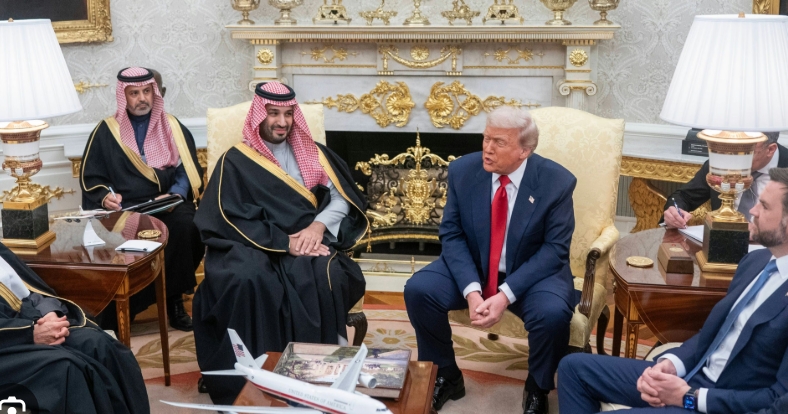
As news surfaces that a ceasefire in the Iran-Israel-US war is imminent, the Gulf states find themselves facing various dilemmas. Recently, US President Trump announced that a ceasefire with Iran is drawing near and urged Gulf nations, such as Saudi Arabia and Qatar, to join the Abraham Accords. President Trump mentioned the names of countries he recently spoke with by phone—including Saudi Arabia, the United Arab Emirates, Qatar, Pakistan, Turkey, Jordan, and Bahrain—and stated that he urged the leaders of these nations to sign the Abraham Accords once a war-termination agreement with Iran is reached. Trump remarked that, considering the effort the US has put into solving this highly complex puzzle, signing the Abraham Accords is an obligation for all these countries at the very least. He reportedly even expressed that Iran should pursue the normalization of relations with Israel. Meanwhile, Pakistan rejected Trump’s proposal, while the other nations have not released any public response.
These remarks by President Trump are believed to have placed Saudi Arabia and Qatar, which have not participated in the Abraham Accords, into deep contemplation. Saudi Arabia has consistently emphasized that it cannot recognize Israel without the establishment of an independent Palestinian state. Particularly at a time when cooperation between the UAE and Israel is becoming increasingly visible, Saudi Arabia may prefer a contrary route. In fact, Saudi Arabia has recently been pursuing new partnerships with Turkey, Pakistan, and Egypt.
The 2026 Iran-Israel-US war has clearly exposed the dilemmas confronting the Gulf states, such as the limits of their security reliance on the United States and the internal divisions within the Gulf region. Consequently, the Gulf states are expected to contemplate even more deeply regarding the strategies they must adopt in the post-war era.
이란-이스라엘-미국 전쟁 속 걸프 국가들의 고민
안소연(아시아연구소)
이란-이스라엘-미국 전쟁의 휴전이 임박했다는 소식이 들려오는 가운데 걸프 국가들은 여러 고민에 놓여 있다. 최근 미국 트럼프 대통령은 이란과 휴전이 가까워지고 있다고 전하며 사우디아라비아, 카타르 등의 걸프 국가들에 아브라함 협정 체결에 동참할 것을 촉구하였다. 트럼프 대통령은 자신과 최근 전화 통화를 한 사우디아라비아, 아랍에미리트, 카타르, 파키스탄, 튀르키예, 요르단, 바레인 등의 이름을 언급하고 이들 국가 지도자들에게 이란과 전쟁 종식 합의에 도달하면 아브라함 협정에 가입할 것을 촉구했다고 밝혔다. 트럼프 대통령은 미국이 매우 복잡한 퍼즐을 맞추려 노력한 것을 고려하면 최소한 이들 모든 국가는 아브라함 협정에 서명하는 것이 의무라고 언급하였다. 심지어 트럼프 대통령은 이란도 이스라엘과 관계 정상화를 추진해야 한다는 의사를 밝힌 것으로 알려졌다. 한편 파키스탄은 트럼프의 제안을 거부하였으며 다른 국가들은 공개적인 반응을 내놓지 않았다.
이와 같은 트럼프 대통령의 발언에 아브라함 협정에 참여하지 않은 사우디아라비아, 카타르는 깊은 고민에 놓였을 것이라 판단된다. 사우디는 지속해서 팔레스타인 국가 수립이 없이는 이스라엘을 인정할 수 없다고 강조하고 있다. 특히 최근 아랍에미리트와 이스라엘 간 협력 구도가 더욱 가시화되고 있는 상황에서 사우디아라비아는 오히려 반대의 노선을 선호할 수도 있다. 최근 사우디아라비아는 튀르키예, 파키스탄, 이집트와 새로운 협력을 추진하고 있다.
2026년 이란-이스라엘-미국 전쟁은 미국에 대한 안보 의존의 한계, 걸프 국가 내부의 분열과 같은 걸프 국가들이 처한 딜레마를 고스란히 드러내 주었다. 이에 따라 이번 전쟁 이후 취할 전략에 대해 걸프 국가들의 고민은 더욱 깊어질 것으로 보인다.