
Pakistan’s Strategic Dilemma Under the Mecca Joint Defense Agreement
YANG, Jung-a(SNUAC)
Saudi Arabia and Pakistan signed a Strategic Mutual Defence Agreement on September 17, 2025, and on August 7, 2026, the two countries, together with Türkiye, concluded the Mecca Joint Defense Agreement. Since September, as Yemen’s Houthi rebels have intensified their attacks on Saudi territory, Pakistan has come under pressure to honor these commitments. Pakistan’s support and response should be understood in two distinct phases: military assistance provided under the 2025 bilateral agreement, and measures taken after the signing of the 2026 Mecca Joint Defense Agreement.
On April 11, 2026, the Saudi Ministry of Defense announced that Pakistani forces, including Pakistan Air Force fighter jets and support aircraft, had arrived at King Abdulaziz Air Base. The following month, Reuters reported that Pakistan had deployed 8,000 troops, JF-17 fighter jets, and Chinese-made HQ-9 air defense systems to Saudi Arabia. This assistance came as regional security deteriorated in the aftermath of the recent war with Iran. Since the 1980s, Pakistan has stationed troops in Saudi Arabia and provided training and military support, while Saudi Arabia has extended economic assistance to Pakistan. The relationship has long rested on this complementary exchange of security for economic support.
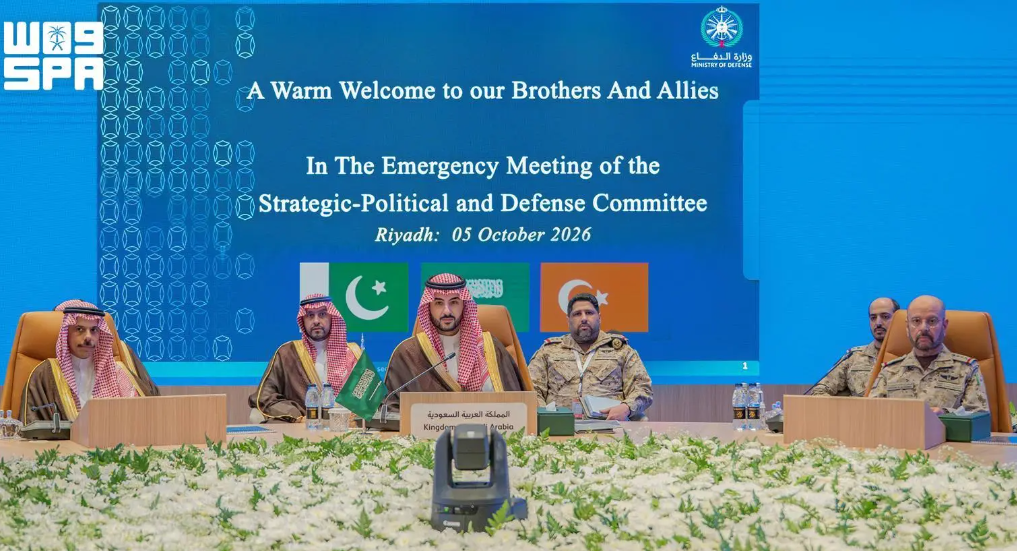
After the Houthi attacks in September, Pakistan’s initial response did not go beyond diplomatic statements of support for Saudi Arabia and its commitment to the kingdom’s defense. The agreement’s collective defense provisions were invoked for the first time on October 5, when the three countries decided to rapidly deploy troops and military assets to Saudi Arabia in accordance with approved arrangements and their respective domestic laws. They did not, however, specify how or to what extent this support would be provided. Pakistan has maintained that its forces will be limited to defensive operations within Saudi territory and will not take part in combat operations between Saudi Arabia and the Houthis. This is consistent with its past conduct: in 2015, during the Yemeni civil war, Pakistan likewise declined to join the fighting and has generally refrained from direct combat involvement.
Pakistan’s central challenge lies in the difficulty of clearly separating the defense of Saudi territory from the broader conflict with the Houthis. At the same time, it faces the diplomatic challenge of maintaining friendly relations with Iran and preserving its role as a neutral mediator in the region. On October 20, Pakistan’s Chief of Army Staff, Asim Munir, visited Tehran and met with Mohammad Bagher Ghalibaf, Speaker of the Iranian Parliament. The visit underscores that managing its role as a mediator between Iran and the United States remains a critical strategic challenge for Pakistan.
메카방위협정 이후 파키스탄의 전략적 과제
양정아(아시아연구소)
사우디아라비아와 파키스탄은 2025년 9월 17일 전략적 상호 방위협정(Strategic Mutual Defence Agreement), 그리고 2026년 8월 7일 튀르키예와 함께 메카 공동방위협정(Mecca Joint Defense Agreement)를 맺었다. 최근 9월 이후 후티 반군이 사우디아라비아 영토 공격을 강화하면서 파키스탄은 지난 협정을 이행해야 하는 과제를 안게 되었다. 현재 파키스탄의 지원과 대응은 기존 2025년 양자협정에 따른 군사적 지원과 2026년 메카 공동 방위협정 체결 이후의 조치로 구분할 필요가 있다.
사우디아라비아 국방부는 2026년 4월 11일 파키스탄 공군 전투기와 지원기를 포함한 병력이 킹 압둘 아지즈 공군기지(King Abdulaziz Air Base)에 도착했다고 발표했다. 다음 달 로이터는 사우디에 파키스탄의 병력 8,000명, JF-17 전투기, 중국제 HQ-9 방공체계가 배치되었다고 보도했다. 해당 군사적 지원은 지난 이란 전쟁 국면 이후에 역내 안보가 불안정해진 상황에서 이루어졌다. 1980년대부터 파키스탄은 사우디아라비아에 주둔하며 훈련과 군사력을 지원해왔고, 사우디아라비아는 파키스탄에 경제적 지원을 하는 등, 안보와 경제의 상호 보완적인 관계를 유지해왔다.
지난 9월 예멘 후티 반군의 공격 이후, 파키스탄의 초기 대응은 사우디아라비아에 대한 지지와 방위 의지를 표명하는 외교적 수사에 그쳤다. 협정에 따른 집단방위 조치가 처음 발동된 것은 10월 5일로, 3국은 승인된 약정과 각국의 국내법에 따라서 병력과 군사력을 사우디에 신속하게 배치하기로 결정했다. 다만, 어떻게, 어느 범위로 지원할 것인지는 구체적으로 밝히지 않았다. 파키스탄은 자국 병력의 역할을 사우디아라비아 영토 내 방어작전에 제한하고, 사우디와 후티 반군 간의 전투 작전에는 참여하지 않는다는 입장을 고수했다. 지난 2015년 예멘 내전 사례에서도 파키스탄은 참전 거부를 밝혔던 것처럼 직접적인 전투 참여는 자제해왔다.
현재 파키스탄이 직면한 과제는 사우디아라비아의 영토 방어와 후티와의 분쟁 개입을 명확하게 구분하기 어렵다는 데 있다. 동시에 이란과의 우호적인 관계를 유지하면서 역내 중립적인 중재자로서의 입지도 지켜야 하는 외교적 부담을 안고 있다. 10월 20일 파키스탄 육군 참모총장 아심 무니르는 테헤란을 방문하여 이란 의회 의장 모하메드 바게르 갈리바프와 회담을 가졌다. 이는 이란과 미국 사이에서 중재자 역할을 수행하는 일이 파키스탄에 중대한 전략적 과제로 남아 있음을 보여준다.