Achievements and Challenges of the 2026 Korea–Türkiye Summit
Han Ha-eun (SNUAC)
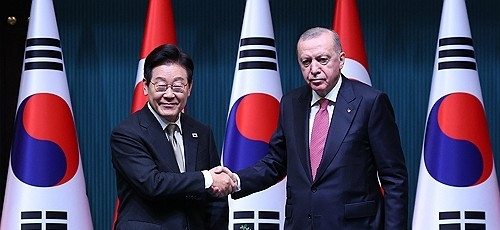
The Korea–Türkiye summit held in Seoul in November 2026 marked an important step toward transforming the historical ties between the two countries, often described as “brother nations” since the Korean War, into a more substantive economic and security partnership. Ahead of the 70th anniversary of diplomatic relations in 2027, both countries agreed to expand cooperation in strategic industries, including nuclear energy, defense, energy infrastructure, and critical minerals.
A key outcome of the summit was the advancement of cooperation in the nuclear energy and defense sectors. Technical and financial cooperation surrounding Türkiye’s Sinop Nuclear Power Plant project has opened new opportunities for South Korea’s nuclear industry to expand into overseas markets. Building on their existing collaboration on Türkiye’s Altay main battle tank, which incorporates South Korean technology, the two countries also explored joint defense production and exports to third-country markets, moving beyond conventional arms transactions toward broader industrial partnerships. Cooperation has also expanded into critical minerals and supply chain security. In particular, collaboration on critical minerals and rare earth elements could help South Korean companies reduce their dependence on concentrated sources of raw materials and establish alternative supply channels. Türkiye, meanwhile, stands to benefit from South Korea’s experience in nuclear power plant construction and advanced manufacturing technologies, highlighting the complementary economic interests of both countries.
Nevertheless, significant challenges remain. In 2025, South Korea exported approximately $9.09 billion worth of goods to Türkiye while importing only $1.57 billion, resulting in a trade surplus of roughly $7.5 billion and reflecting a persistent imbalance in bilateral trade. Alongside this imbalance, Türkiye’s domestic industry protection policies and import restrictions on South Korean products remain important trade issues requiring bilateral attention. As of June 2026, Türkiye maintained 19 anti-dumping and safeguard measures affecting South Korean products, while complicated customs clearance and certification procedures continued to create obstacles for Korean businesses seeking access to the Turkish market. The agreement reached at the summit to elevate the Korea–Türkiye Free Trade Agreement(FTA) Joint Committee from the director-general level to the ministerial level represents a meaningful institutional step forward. However, the real challenge lies not in upgrading the committee itself, but in translating this decision into tangible reductions in trade barriers and greater mutual investment. Ultimately, the summit’s achievements will be measured by concrete outcomes, including securing the Sinop nuclear power plant contract, realizing joint defense exports, easing trade restrictions, and expanding bilateral investment.
The broader significance of the summit lies in its potential to transform a relationship rooted in historical solidarity into a forward-looking partnership built around strategic industries and economic security. What matters now is not simply reaffirming friendship, but delivering on the commitments made. Whether South Korea and Türkiye can move beyond their historical bonds to become genuine strategic partners in shaping the future of industry and economic security will ultimately depend on concrete implementation and measurable results, rather than diplomatic declarations alone.
2026년 한·튀르키예 정상회담의 성과와 과제
한하은(아시아연구소)
2026년 11월 서울에서 열린 한·튀르키예 정상회담은 한국전쟁으로 맺어진 ‘형제의 나라’라는 역사적 유대를 실질적인 경제·안보 협력으로 발전시키는 계기가 되었다. 2027년 수교 70주년을 앞두고 양국은 원전, 방산, 에너지, 핵심광물 등 미래 산업을 중심으로 협력의 폭을 넓히는 데 뜻을 모았다.
이번 회담의 핵심은 원전과 방산 분야의 협력 구체화다. 튀르키예 시놉 원전 건설사업을 둘러싼 기술·금융 협력은 한국 원전 산업의 해외 진출 가능성을 넓혔다. 또한 한국 기술이 적용된 튀르키예 알타이 전차를 기반으로 방산 공동생산과 제3국 수출을 모색하면서 양국의 협력은 단순한 무기 거래를 넘어 공동사업의 영역으로 확대되고 있다. 협력의 범위는 핵심광물과 공급망 분야로도 확장됐다. 특히 핵심광물·희토류 협력은 한국 기업이 특정 국가에 집중된 원자재 조달 구조를 완화하고 새로운 자원 확보 경로를 개척할 수 있다는 점에서 중요하다. 튀르키예 역시 한국의 원전 건설 경험과 첨단 제조기술을 활용해 자국 산업의 경쟁력을 높일 수 있다는 점에서 양국의 이해관계가 맞닿아 있다.
그러나 해결해야 할 과제도 적지 않다. 2025년 한국의 대튀르키예 수출은 90.9억 달러, 수입은 15.7억 달러로 약 75억 달러의 무역흑자를 기록하며 양국 간 교역 불균형이 지속되고 있다. 한국의 대규모 무역흑자가 지속되는 가운데, 튀르키예의 자국 산업 보호정책과 한국 기업에 대한 수입 규제 역시 양국이 풀어야 할 주요 통상 현안이다. 특히 2026년 6월 기준 튀르키예가 한국산 제품에 적용하고 있는 19건의 반덤핑·세이프가드 조치와 복잡한 통관·인증 절차는 한국 기업의 시장 진출에 부담으로 작용하고 있다. 이번 정상회담에서 양국이 한·튀르키예 FTA 공동위원회를 국장급에서 장관급으로 격상하기로 한 것은 의미 있는 진전이다. 그러나 중요한 것은 협의체의 격상이 아니라 실질적인 무역장벽 완화와 상호 투자 확대로 이어지는 것이다. 결국 이번 정상회담의 성과는 시놉 원전 수주와 방산 공동수출의 실현, 그리고 무역장벽 완화와 상호 투자 확대라는 구체적인 결과로 평가받게 될 것이다.
이번 정상회담의 의의는 과거의 혈맹을 미래 산업과 경제안보를 함께 설계하는 동반자 관계로 발전시킬 가능성을 확인했다는 데 있다. 이제 중요한 것은 우호의 선언이 아니라 약속의 실행이다. 한국과 튀르키예의 관계가 과거의 혈맹을 넘어 미래 산업과 경제안보를 함께 책임지는 전략적 동반자 관계로 발전할 수 있을지, 이제 그 답은 외교적 선언이 아닌 구체적인 실행과 성과에 달려 있다.