
메카방위협정: 사우디아라비아의 안보 다변화와 파키스탄의 전략적 위상 강화는 가능한가?
양정아 (아시아연구소)
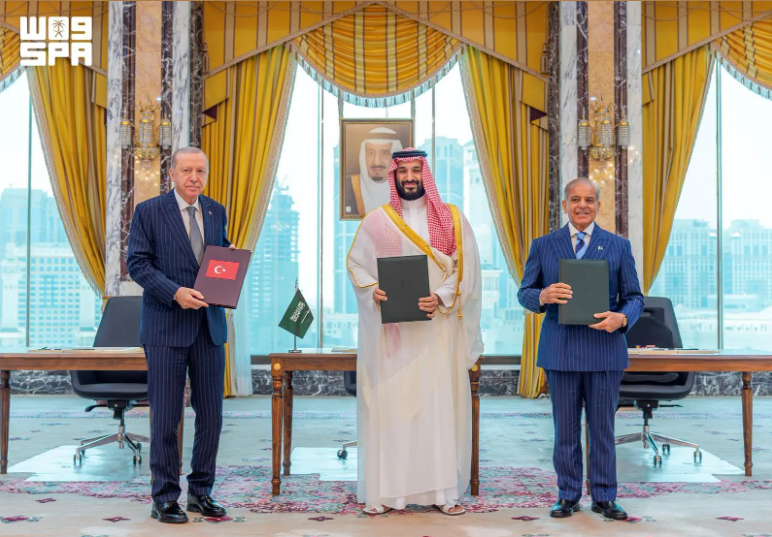
지난 8월 7일 사우디아라비아, 파키스탄, 튀르키예 3국이 사우디아라비아 메카에서 메카방위협정(Mecca Joint Defence Agreement)을 체결했다. 무함마드 빈 살만 사우디 왕세자, 에르도안 튀르키예 대통령, 셰바즈 샤리프 파키스탄 총리가 서명했고, 핵심 원칙은 어느 한 나라에 대한 공격을 3국 모두에 대한 공격으로 간주하는 집단방위이다.
2025년 9월 17일 사우디아라비아와 파키스탄 양국은 전략적상호방위협정(Strategic Mutual Defence Agreement, SMDA)을 맺은 바 있다. 2026년 이란의 걸프 국가 공격 등으로 역내 안보 질서가 변화했고, 미국의 군사 지원 의지에 대한 불확실성이 커지면서 안보 공백이 발생했다. 이에 튀르키예를 안보 동맹으로 편입시키며 방위 체계가 3국으로 확대되었다.
협력 범위는 집단 억지력 강화와 방위 협력 확대로 규정했다. 구체적인 군사 작전과 의무, 범위 등은 공개되지 않았다. 파키스탄 외무장관 이샤크 다르는 메카방위협정이 특정 국가를 겨냥하지 않는다고 밝혔으며, UN 헌장 51조의 개별적, 집단적 자위권에 부합한다고 설명했다. 본 협정으로 사우디아라비아는 기존 방위 파트너인 미국과의 안보관계를 유지하는 동시에 안보 협력 상대를 다변화할 수 있다. 파키스탄은 중동 역내 안보에서 역할을 확대하고 제도적인 위상을 강화하기 위한 목적이 있다.
8월 31일 이스탄불에서 첫 회의가 개최되었다. 3국의 외무장관, 국방장관, 군 최고 지휘관이 참석했고, 사우디아라비아 리야드에 사무국을 설치하고 파키스탄에서 초대 사무총장을 맡기로 결정했다. 협정 제도화에 착수하여 파키스탄은 첫 3년간 사무국을 이끌 예정이다.
9월 16일, 사우디아라비아는 전날 저녁 후티가 드론으로 메카 남부를 공격했다고 밝혔으나 후티는 이에 반박했다. 파키스탄 정부는 후티 공격을 강력하게 비판했고, 외무부 대변인은 이번 위협에서 사우디아라비아와의 방위 협정을 이행할 의지가 있음을 공식적으로 밝혔다. 9월 19일 후티의 공격으로 리야드의 킹 칼리드 국제공항의 연료 저장 시설에서 화재가 발생하면서 사우디아라비아는 다시 안보 위협에 직면했다.
사우디아라비아가 안보 협력 다변화를 추진하고 있음에도 불구하고 여전히 역내 군사적 위협에 노출되어 있음을 보여준다. 파키스탄은 사우디아라비아의 방위 약속을 이행하는 동시에, 후티를 지원하는 이란과의 협력 관계를 안정적으로 관리해야 하는 과제가 남아있다. 이번 후티 공격에 대한 대응은 본 협정이 상징적 연대에 머무를지, 실제 군사적 위해 상황에서 집단방위체제로 작동할 것인지를 가늠하는 계기가 될 수 있다.
The Mecca Joint Defence Agreement: Can It Diversify Saudi Arabia’s Security Partnerships and Strengthen Pakistan’s Strategic Position?
YANG, Jung-a(SNUAC)
On August 7, Saudi Arabia, Pakistan, and Türkiye signed the Mecca Joint Defence Agreement in Mecca, Saudi Arabia. The agreement was signed by Saudi Crown Prince Mohammed bin Salman, Turkish President Recep Tayyip Erdoğan, and Pakistani Prime Minister Shehbaz Sharif. Its core principle is collective defense: an attack on any one signatory will be treated as an attack on all three.
The agreement builds on the Strategic Mutual Defence Agreement (SMDA) concluded between Saudi Arabia and Pakistan on September 17, 2025. Since then, the regional security order has shifted, most notably with Iran’s attacks on Gulf states in 2026, while growing uncertainty over Washington’s willingness to provide military support has left a security vacuum. Against this backdrop, the two countries brought Türkiye into the alliance, expanding the defense framework into a trilateral one.
The agreement defines its scope as strengthening collective deterrence and expanding defense cooperation, but details such as specific military operations, obligations, and the extent of each party’s commitments have not been made public. Pakistani Foreign Minister Ishaq Dar stated that the agreement is not directed against any particular country and described it as consistent with the inherent right of individual and collective self-defense under Article 51 of the UN Charter. For Saudi Arabia, the agreement offers a way to diversify its security partnerships while maintaining its security relationship with the United States, its long-standing defense partner. For Pakistan, it is a means of expanding its role in Middle Eastern regional security and enhancing its institutional standing.
The first meeting under the agreement was held in Istanbul on August 31, attended by the three countries’ foreign ministers, defense ministers, and top military commanders. The participants agreed to establish a secretariat in Riyadh, with Pakistan appointing the first secretary-general. With this step, the institutionalization of the agreement has begun, and Pakistan will lead the secretariat for its first three years.
On September 16, Saudi Arabia announced that the Houthis had carried out a drone attack on southern Mecca the previous evening, a claim the Houthis denied. The Pakistani government strongly condemned the attack, and a Foreign Office spokesperson officially stated that Pakistan was prepared to honor its defense agreement with Saudi Arabia in the face of this threat. On September 19, Saudi Arabia again came under threat when a Houthi attack set fire to fuel storage facilities at King Khalid International Airport in Riyadh.
The incident shows that, despite its efforts to diversify its security partnerships, Saudi Arabia remains exposed to military threats in the region. Pakistan, for its part, still faces the challenge of fulfilling its defense commitments to Saudi Arabia while maintaining a stable relationship with Iran, the Houthis’ principal backer. The response to the latest Houthi attacks may serve as a test of whether the agreement remains a symbolic show of solidarity or functions as a genuine collective defense arrangement when its members face actual military threats.