
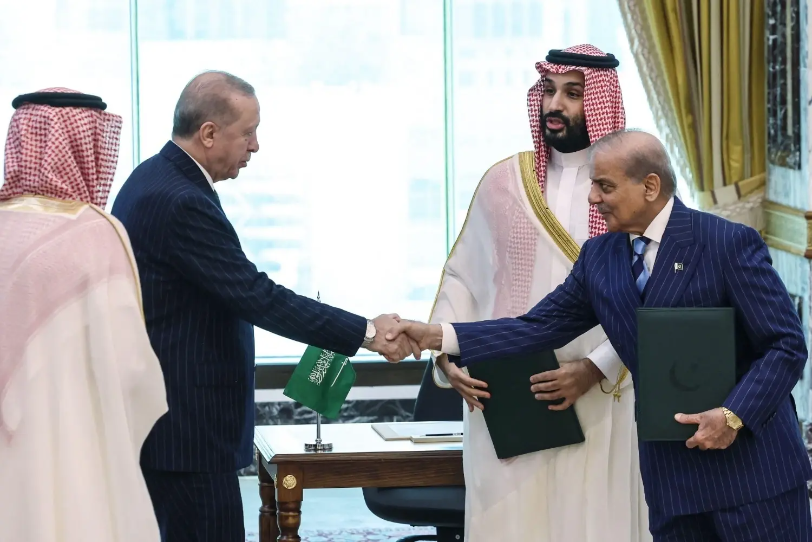
메카협정의 첫 시험대: 후티의 사우디 공격과 튀르키예의 선택
한하은(아시아연구소)
2026년 8월 7일, 사우디아라비아·튀르키예·파키스탄은 메카에서 공동방위협정을 체결했다. 한 국가에 대한 무력공격을 세 국가 모두에 대한 공격으로 간주한다는 내용이다. 세 나라가 지금 공동방위 틀을 만든 배경에는 중동 안보질서의 불확실성이 있다. 미국의 안보 공약에 대한 의문과 이란·이스라엘을 둘러싼 갈등이 커지면서, 세 국가는 기존 동맹을 대체하기보다 서로의 부족한 부분을 보완하는 네트워크를 선택했다. 사우디는 군사적 선택지를 넓히고, 파키스탄은 걸프 지역에서 영향력을 확대하며, 튀르키예는 중동 안보질서에 더 깊이 관여할 수 있게 됐다. 결국 이 협정은 사우디의 자본과 지역 영향력, 파키스탄의 군사력과 핵 억지력, 튀르키예의 NATO 경험과 방위산업을 하나의 안보 틀 안에 결합하려는 시도라고 볼 수 있다.
특히 튀르키예의 역할이 중요하다. 세 나라 중 유일한 NATO 회원국이자 무인기·미사일·함정을 생산하는 방산 강국인 튀르키예는 NATO를 메카협정으로 대체하려는 것이 아니다. 서방 안보체제 안에서 사우디의 자본과 파키스탄의 군사 역량을 연결하고, 정치적 영향력과 방산시장을 확대하려는 것이다. 8월 31일 첫 전략정치방위위원회가 공동 기술개발과 생산, 군사적 상호운용성 강화를 논의한 것도 같은 맥락이다.
그러나 협정 체결 한 달 만에 이 구상은 현실의 시험대에 올랐다. 9월 들어 후티의 사우디 공격이 확대됐고, 사우디는 메카로 접근하던 후티 드론을 요격했다고 발표했다. 후티는 메카를 목표로 했다는 주장을 부인했지만, 20일에는 리야드를 향해 탄도미사일을 발사했다.
튀르키예의 대응도 달라졌다. 초기에는 공격 규탄과 사우디에 대한 연대에 그쳤지만, 9월 19일 하칸 피단 외무장관은 메카협정에 따라 사우디의 군사적·기술적 필요를 지원할 준비가 있다고 밝혔다. 직접 참전을 선언한 것은 아니지만, 외교적 지지를 넘어 실질적 방위 지원 가능성을 열어둔 것이다. 후티가 튀르키예와 파키스탄에 사우디를 지원하지 말라고 경고한 것도 협정이 실제 전략 변수로 떠올랐음을 보여준다.
메카협정의 효력은 아직 완전히 검증되지 않았다. 세 나라는 상설 사무국과 전략정치방위위원회를 만들고 공동훈련과 방산협력을 추진하고 있지만, 사우디가 공식적인 군사개입을 요청한 적은 없다. 공동방위 조항이 실제 전장에서 어느 수준의 의무를 의미하는지도 아직 불분명하다.
결국 핵심 질문은 서로 다른 이해관계를 가진 세 국가가 위기의 비용까지 함께 부담할 수 있는가이다. 그 중심에는 튀르키예가 있다. NATO 회원국이자 독자적 중동 안보 행위자를 지향하는 앙카라가 사우디에 대한 연대를 어디까지 행동으로 옮길 것인가. 메카협정의 진짜 효력은 서명문이 아니라 바로 그 선택에서 드러날 것이다.
The Makkah Pact’s First Test: Houthi Attacks on Saudi Arabia and Türkiye’s Choice
Haeun Han (SNUAC)
On August 7, 2026, Saudi Arabia, Türkiye, and Pakistan signed a joint defence agreement in Mecca, under which an armed attack against one country would be regarded as an attack against all three. The agreement emerged against the backdrop of growing uncertainty in the Middle Eastern security order. As questions have grown over U.S. security commitments and tensions involving Iran and Israel have intensified, the three countries have chosen to build a network that complements their respective weaknesses rather than replaces their existing alliances. Saudi Arabia can diversify its military options, Pakistan can expand its influence in the Gulf, and Türkiye can deepen its involvement in the regional security order. Ultimately, the agreement can be seen as an attempt to bring Saudi Arabia’s financial resources and regional influence, Pakistan’s military capabilities and nuclear deterrent, and Türkiye’s NATO experience and defence industry into a single security framework.
Türkiye’s role is particularly important. As the only NATO member among the three and a major defence producer of drones, missiles, and naval vessels, Türkiye is not seeking to replace NATO with the Makkah agreement. Rather, Ankara seeks to connect Saudi capital with Pakistani military capabilities while expanding its own political influence and defence market within the broader Western security architecture. The first meeting of the Strategic Political and Defence Committee on August 31, which discussed joint technological development and production as well as greater military interoperability, reflected this broader objective.
Yet only a month after the agreement was signed, this emerging framework faced its first real test. Houthi attacks against Saudi Arabia intensified in September, and Saudi authorities announced that they had intercepted a Houthi drone approaching Mecca. The Houthis denied that Mecca had been their target, but on September 20 they launched a ballistic missile toward Riyadh.
Türkiye’s response has also evolved. Ankara initially limited its response to condemning the attacks and expressing solidarity with Saudi Arabia. On September 19, however, Foreign Minister Hakan Fidan stated that Türkiye was prepared to help meet Saudi Arabia’s military and technical needs under the Makkah agreement. This did not amount to a commitment to direct military intervention, but it opened the possibility of tangible defence assistance beyond diplomatic support. The Houthis’ warning to Türkiye and Pakistan not to support Saudi Arabia also suggests that the agreement has begun to emerge as a real strategic factor.
The effectiveness of the Makkah agreement has yet to be fully tested. The three countries have established a permanent secretariat and a Strategic Political and Defence Committee and are pursuing joint military exercises and defence-industrial cooperation. Yet Saudi Arabia has not formally requested military intervention, and it remains unclear what level of obligation the collective-defence clause would entail in an actual conflict.
Ultimately, the central question is whether three countries with different strategic interests are willing to share the costs of a crisis. Türkiye stands at the center of that question. As both a NATO member and a country seeking a more autonomous role as a Middle Eastern security actor, how far will Ankara translate its solidarity with Saudi Arabia into action? The real effectiveness of the Makkah agreement will be determined not by what was signed in Mecca, but by the choice Türkiye makes when the agreement is put to the test.
(출처: hurriyetdailynesw.com/ https://www.hurriyetdailynews.com/mecca-agreement-broadens-turkiyes-regional-defense-ties-225370
)